

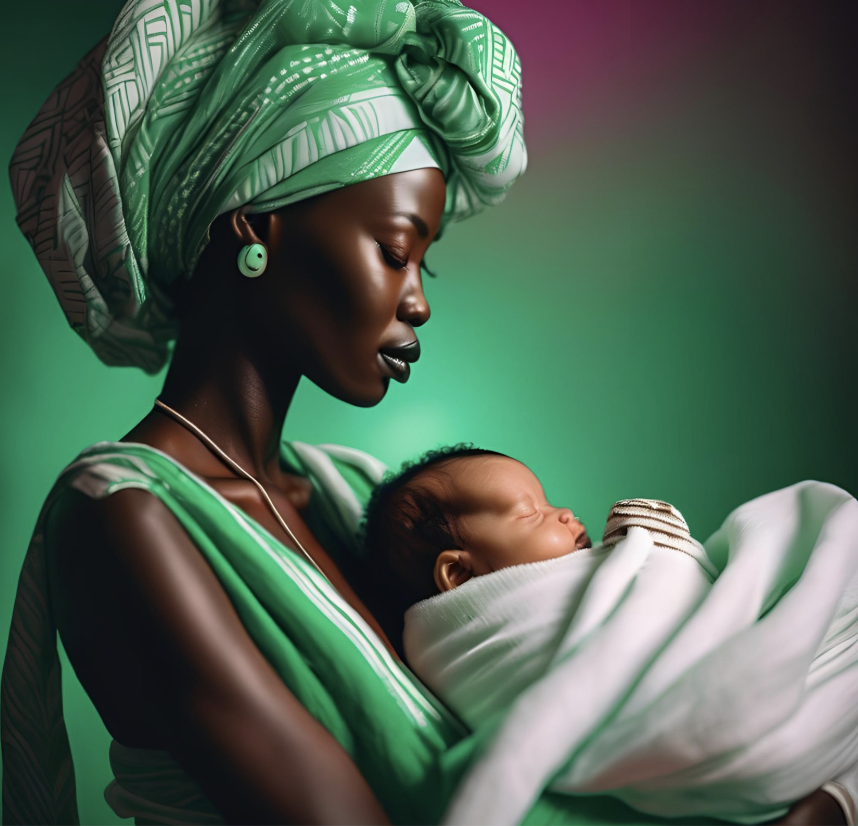
I found out my mother was dead while I was on a bus in Croydon.
I had just finished a twelve-hour shift and my feet hurt so badly I could barely feel them anymore. The old woman I cared for had spent most of the evening complaining that her tea was too cold, her soup was too salty, and that people like me should not be working in England in the first place. I smiled through every insult, cleaned her dishes, watched her, and waited for the clock to move. The job paid me the most, so if insults and tantrums were the price I had to pay, I would gladly do so. When I finally stepped outside her flat, I heaved a long sigh of temporary relief, already dreading the next time I would have to go back. The cold London air hit me and it felt like freedom. For now, I was free.
I boarded the bus home and switched on my phone. That was when I saw the missed calls. My sisters and brother had tried to reach me multiple times on WhatsApp, and worse, Dayo, my cousin who never called anyone but always texted, had tried to reach me too. My stomach tightened. I knew something was wrong; I could sense it.
The first bad omen had come that morning. I had hit my leg against a stone on my way to my first job, and my body felt colder than it should have all day. The signs were there and I should have known.
My hands shook as I tried calling my brother back. I was almost dialling when a particular message, among all others rushing in, caught my eye.
“Mercy, mummy is dead.”
For a moment, the world stopped moving and everything around me went still. The noise of the people on the bus faded, and the horns of cars and buses outside became distant. The world started to go dark and blank at its edges. I could not bring myself to call Emma, my brother, back. I didn’t want to believe it. I wanted to hear it said aloud, but at the same time, I desperately wanted to go back to the moment before I had seen the message. I would have stayed longer at my patient’s house; I would not have minded the insults, the snide remarks, and the cold shoulders as long as the message had never reached me. My phone began to ring again before I got home. As soon as I stepped off the bus, I picked it up.
“Mercy, where have you been? Did you see our calls? Mummy is dead; she died a few hours ago. Can you hear me?” my sister said on the other side of the phone. I could hear her voice breaking apart through the tears and noise in the background.
I cut the call as I made my way home.
Eight years. I had not laid eyes on my mother in person for a good eight years.
Before I left, I had never been away from her for more than three months, even when I was in school. I would always find an excuse to come home. I had stayed with my parents after graduating because every effort to find a job in Lagos was fruitless. It was after a year of unemployment following NYSC that my parents came to the conclusion that I should leave for the UK.
My mother was the one who suggested it.
“You should try abroad,” she said one evening while we sat outside the compound, watching people return from work. “This country is not going to give you anything.”
I refused at first; I had never imagined living anywhere else. But she was persistent in the way she always was, and gradually I began to accept it. That was how my mum took out a loan to help me and after months of trying different routes, one finally worked.
The few weeks I spent in Nigeria before leaving were some of the hardest weeks of my life. I was filled with mixed emotions that I couldn’t process in time. It would be the first time I had ever been really away from my family and friends. The first time I would be fully on my own. The first time, I would be leaving for somewhere so far away that I couldn’t just decide to come home when I became homesick.
I stayed glued to my mother’s side throughout those weeks. I spent more time trying to take Lagos in, to really see it, as if I were already looking back at it from somewhere far. I paid more attention to everything: the pure water seller by the roadside, the gala boys who ran after cars and buses, and the agberos shouting at the top of their voices. I cried on my way home one afternoon after realising how much I would miss the only place I had ever truly known.
My mother spent hours packing different Nigerian snacks and products that would be hard to find in the UK. The Gino sachet jollof mix, the cabin biscuits, and the pepper soup spice were carefully arranged in a bag while we struggled to keep the luggage under the weight limit. I cried my eyes out, waving goodbye to my family at the airport.
If only I had known that would be the last time I would see her, I would have held on longer.
But what would I have done differently, even if I had known? Would I have stayed? By now I would probably be earning wages that could barely keep me alive. At least the money I had made in the UK had been enough to get a decent apartment, enough to send home every month, to pay school fees, and to help repair the house. I had savings for emergencies, although emergencies like this were never something I had imagined saving for.
But none of that mattered now; she was dead. My mother was… dead.
The first year in the UK was harder than I imagined. Learning a new culture that was so different from the only one I had ever known took everything out of me. For the first few months, I wished desperately that I were back home in Lagos, in my parents’ house, in my own bed. I wouldn’t have minded sharing a room with my sister; I just wanted to go back.
The feeling never left; I just learned to live with it as each day passed. On the toughest days, I would close my eyes and imagine I was in Nigeria, in Lagos, in my parents’ sitting room, watching a K-drama with my sisters and mother while my father tapped quietly on his phone, squinting through his glasses as he scrolled through Facebook. I often thought about the woman who sold Akara by the road near our house. I thought about the taste of her Akara tucked inside soft agege bread. No matter how many times I tried to recreate it here, it was never the same. The thought of home made me smile and ache at once.
I missed seeing children in their school uniforms heading home in the afternoon. I missed Lagos noise, the kind of noise that always annoyed me when I lived in it, but I now badly wanted to hear it.
One evening, about eighteen months in, I had a patient who reminded me of my mother. She had the same soft palm and the same way of pausing before she spoke. I excused myself to the bathroom and sat on the edge of the tub and wept for a long time. Then I washed my face, went back out and finished my shift. That was the year I stopped counting the months.
When I finally got home, I looked around the space I had built for myself and knew, without any deliberation, that I needed to see my mother one last time before she was buried. Without thinking twice, I booked a flight back to Lagos.
The flight was hell for me; I couldn’t stop crying. Even the man sitting next to me could not hide that he felt for me; he kept glancing my way. I thought about everything: my life as it had been back in Lagos, how my mother had lived, how she had carried her family. I realised I could no longer picture her face clearly, except from the photograph my sister had sent last Christmas. I took out my phone and stared at the image of her staring back at me. I traced my fingers over her face, then clutched the phone to my chest as I began sobbing. I did not sleep a wink.
It was the smell of Lagos that hit me first as I stepped off the plane. The weight of the air and the heat. I had always wondered what it would feel like to return home. I had always imagined it as something close to joy but the sadness and grief sitting in my chest made it hard to breathe.
The ride from the airport felt brutally short. I wanted it to take longer. I was in a hurry and not in a hurry at all. I took a bike from the junction near my house, and that was when I began to see how much had changed in eight years. Most of the people I once knew were no longer there. The Akara woman I had thought about so often was gone. Someone else had taken her spot to sell bole and groundnuts. This was not the return I had imagined. I had seen videos of children coming home to surprise their parents and that was what I had always wanted. I had pictured myself stopping to greet our old neighbours with pride. But now everything had changed; it was as if time had moved on without me in it and no one waited. Some of the buildings were older, some had been replaced with new ones and the road had gotten worse.
My chest tightened as I arrived at our house. The gate was now rusted and hanging open. I walked through it and into the group of people gathered outside. I heard my cousin mention my name, and the crowd turned to look.
My immediate younger sister was the first to come running. She was so much bigger now. I dropped my bag and held her as she cried in my arms. Then, our last-born sister came running too, and we all stood there holding each other. My brother came out and I could barely recognise him. He was bigger, with a moustache. He was no longer the boy I used to know.
My father appeared in the doorway, and it was when I saw him that I really fell apart. He was older; he had noticeable white hairs and his face was now carrying new lines. I walked into his arms and he held me tightly. He pulled back to look at me properly, and I could see his mouth quivering. I saw the look on his face, the thing he didn’t say but I knew: “Your mother would have loved to see you again.” I pulled him back into my arms and cried, and he gently rubbed my back.
Later, as I stood outside the parlour where people had gathered, my brother came to find me. We didn’t say much at first. Then he said quietly, “She kept your picture on her table. The one from your graduation, she never moved it.” I didn’t know what to do with that information; I still don’t.
I was finally allowed to see her later that night. Her coffin was open and I leaned in to look. My mother was not what I had expected. The woman lying there was different from the one I saw in the photograph or on our video calls. Her skin was paler, her frame was smaller, and her eyes were tightly shut and sunken. I barely recognised her.
I reached out and took her still hands in mine. They were cold.
Eight years. Eight years was what I had spent in another country, in another person’s world, working in other people’s homes. She had been sick and I had been elsewhere, eating, sleeping, working and sending money home. She died without seeing me again.
And that was when something in me snapped. I was angry. Angry at the country that forces its children to leave in order to survive. Angry at the eight years and the distance they had put between us. I was also angry at myself for all the times I didn’t pick up her calls because I was tired, for the visits I kept postponing because the flights were expensive, and because I thought there was always going to be more time. I was angry at her too, angry that she had left before I could come back.
I sank to the floor and sobbed bitterly. I wished I had been there with her at the end. I wished I had been there in flesh and blood, close enough to hear her voice one last time.
The next morning, I took a walk down my street. I greeted some of the old neighbours who were still around. They were surprised to see me and sad to know why I had come. But one thing I noticed was the way some of them looked at me, with something that looked like envy. Lucky, their eyes said. Lucky to have left the country.
But they didn’t know what it had cost.
They didn’t know about the nights I had spent scrubbing strangers’ bathrooms. They didn’t know about the years of loneliness, the festivals I had missed, the funerals or weddings I heard about on our WhatsApp group chat. They didn’t know that I had spent eight years trying to survive in a place that didn’t want me so that the people here could survive in a country that kept failing them.
I closed my eyes and breathed in the Lagos air, the air people complained about. No matter how unsafe the country had become, no matter how badly it had deteriorated, no matter how many of its people remained unemployed, cheated or forgotten, this was the only place that felt like home.
And all it had taken to bring me back was my mother’s death.


