

By Ifeoluwa Suleiman
I spent half my life trying to negotiate with a God I was told couldn’t handle my hunger.
On Sundays, I was a masterpiece of suppression. I wore long skirts that swept the floor, pressed my legs together until they ached, and whispered hymns about holiness. The Bible rested under one arm, my lips sealed in worship, my voice raised in the choir. I sang louder than I felt inside, hoping the music could drown out the heat I carried all week.
I learned early that for a girl like me, safety lay in being small; a vessel that held only scripture and never self. The pews were hard, a physical reminder that comfort was secondary to consecration.
On weekdays, I wrestled with something unnamed: a warmth in my chest, curiosity threading through my thoughts like a secret melody. It wasn’t a rebellion. I just wanted to understand this body pulsing with life, a tenderness too alive to be evil. But in church, every sermon turned that warmth into a warning. I confused shame for sanctity. I spent nights on my knees, not in worship, but in a desperate negotiation.
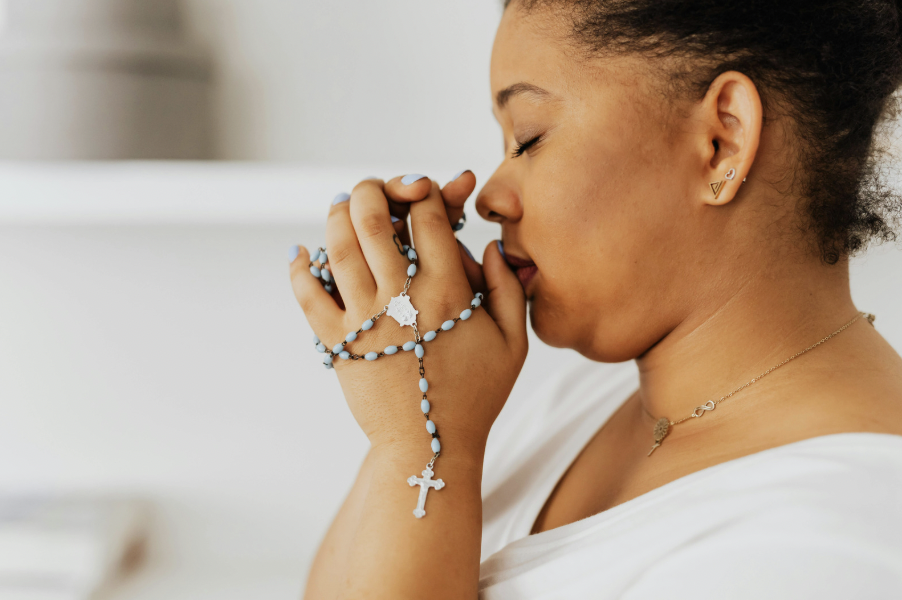
I would repeat, “Sanctify me, oh Lord,” like a shield, trying to use the Word to numb the pulsing of my body as if it were not a part of me. I begged to be made empty, to be “consecrated and set apart,” thinking that if I could just pray the desire away, I would finally be clean enough for the pews.
But suppression hums. It started in the choir loft, fuelled by stolen glances over the tops of hymnbooks and shared smiles when the pastor’s back was turned. These were small, quiet interactions that felt like oxygen.
In the loft, holiness had a sound: a sharp, disciplined unison. But beneath the soprano’s trill and the bass’ rumble, there was a different frequency. I remember the way the still, trapped air of the sanctuary clung to our robes, making the polyester itch against my collar like a restless conscience. We were taught that our voices belonged to the heavens, but my eyes were anchored to the earth, tracing the line of his jaw or the way his thumb marked the page of his hymnal.
It was a dangerous kind of choreography. Every shared glance was a small theft, a rebellion against the idea that our bodies were merely vessels for sound. We were teenagers vibrating with a hunger the hymnal had no lyrics for. While our mouths formed the solemn vowels of “The Old Rugged Cross,” our pulses hammered a different rhythm entirely: a frantic, living beat that whispered: I am here, I am alive, look at me.
He was a tenor with a smile that bent the air. We were sixteen, navigating a manual of rules we didn’t write. One evening, after rehearsal ended and the lights in the main sanctuary dimmed, we found ourselves in the narrow hallway behind the vestry.
The air was thick with the scent of old wooden pews and floor wax. There, in the shadows, the kiss was clumsy and soft. It was a heartbeat of discovery, more prayer than sin.
But by the next Sunday, the shame was public. The air in the church shifted. It was in the eyes that judged me from the front row and the murmurs that hissed louder than the sermon. I was ostracised before I was even spoken to.
The mothers of the church, women who had once patted my cheek with approval, now looked through me as if I were a ghost. I felt the weight of their collective silence, a social excommunication that told me I was no longer the “good girl” they had invested in.
Then came the deliverance. I was made to stand before the congregation while prayers thundered over us like a storm. Anointing oil was pressed so hard into my forehead it felt like a brand, the smell sharp and suffocating, while voices shouted for a “spirit of lust” to leave my body.
The heat in the sanctuary was no longer warmth; it was a heavy, stagnant blanket. I remember the sound of the congregation: a low, rhythmic groan that rose and fell like a tide, punctuated by the sharp clack of heels as people paced in “the spirit.” The Pastor’s voice wasn’t just loud; it was jagged, a serrated edge that cut through my remaining dignity.
As the oil ran down the bridge of my nose, I wanted to tell them that the boy’s hands were gentle, that the hallway was quiet, that nothing felt like the “war” they described. But under the weight of their palms on my shoulders, I felt my voice retreat. I wasn’t being saved; I was being erased.
After that Sunday, my prayer life became a battlefield. Every flicker of warmth made me shut my eyes and chant “Holy Ghost Fire” and “Get behind me,” as if my heartbeat were an enemy. I was trying to starve the woman to keep the girl alive, but the more I prayed for numbness, the more the hunger hummed beneath the surface.
My knees shook, not from conviction, but from the cold weight of isolation. I was a child being taught to fear my skin.
For years, I silenced the part of me that ached. Questions remained unasked for fear of condemnation, for fear of being called “sin made flesh,” until I simply couldn’t anymore.
When I arrived at university, I carried the church in my bones like a chronic ache. I expected the campus to feel like a den of iniquity, but instead, it felt like a vast, terrifying silence. For the first few months, I walked through lecture halls with my shoulders hunched, waiting for a lightning bolt that never came.
I was still chanting “Holy Ghost Fire” under my breath whenever I saw couples near the lagoon, but the words were starting to feel like dry husks in my mouth. I was exhausted from the vigil. I was tired of being my own jailer.
The rain in this new city didn’t smell like the anointing oil of my childhood; it smelled like damp earth and possibility. I began to realise that the “spirit of lust” I had been told to fear was actually a profound, human longing to be seen: not as a soul to be saved, but as a person to be held.
It finally happened in the quiet of a university room, the air heavy with the scent of rain and the rhythmic hum of a ceiling fan. There was no pulpit, no judging eyes, only the soft glow of a desk lamp casting long shadows that felt like a sanctuary of their own.
When he traced his fingers down my arm, I didn’t flinch. The skin didn’t crawl. It settled. It felt like homecoming. It was a spark that lit up a part of me hidden for so long I forgot it existed.
My body didn’t just feel; it remembered. Only this time, the warmth spread slowly. It didn’t feel like a fall from grace; it felt like a return to it. It felt like a language I had been trying to speak my whole life, finally finding a voice. I realised then that God was not hovering over that ceiling fan with a ledger of my sins; He was in the very nerves waking up to the light.
For a long time, I thought I had to kill the woman to save the girl. I thought holiness was a vacuum, a space where nothing human could survive. But in the quiet afterglow, I realised the pulse in my veins wasn’t a distraction from God; it was a testament to Him.
If my body is a temple, then why was I taught to treat it like a prison cell?
I began to look at the Song of Solomon with new eyes. I didn’t see a dry metaphor for the church. I saw the scent of myrrh, the heat of a gaze, and the unapologetic celebration of the skin. To honour the Creator, I had to stop apologising for the creation.
To savour, delight, and be fully present in my skin are not acts of rebellion; they are acts of stewardship. I stopped asking God to take away my desires and started basking in the beauty of who I was and what I felt.
My devotion hasn’t changed; it has simply expanded. I am still the girl who lifts her hands in church, eyes closed, feeling the weight of a hymn move through her. But I am also the woman who knows the sacredness of a lover’s touch, who understands that the heat rising in her body is not a fire to extinguish but a light to tend.
I am both. Not by accident. Not in spite of it. Spirit and flesh are not at war; they are in conversation.
For so long, I had been taught to read my body as interruption, as static against heaven’s signal. But what if it was never noise? What if it was music I had been afraid to learn? The same God who formed my spirit also stitched together nerve endings, breath, and longing. The same hands that wrote commandments also designed skin that tingles under tenderness.
It began to feel dishonest to praise the Creator on Sunday and despise His craftsmanship in myself on Monday. Integration became my quiet rebellion.
I no longer pray for numbness or to be made less than I am. I name my hunger. I honour my holiness. I rest them both under the same grace.
I am a church girl awake to her body, finally whole: not a bomb, but a temple, open for worship.


