

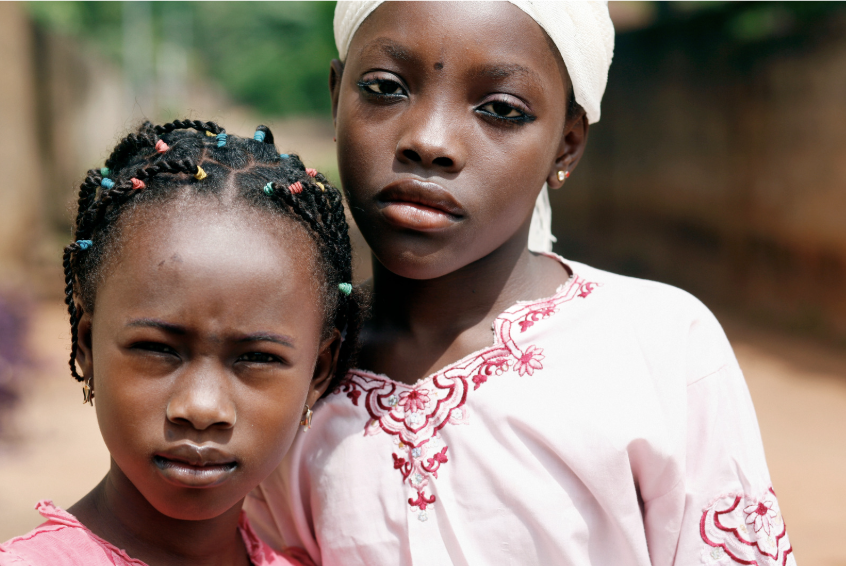
In many African homes, when a parent is about to leave the house, they call the eldest child, no matter how young, to look after their younger siblings and take charge.
“You are now the second in command. Act like the big sister you are,” they say before walking out the door.
Growing up, I loved being second in command at home. I loved the feeling of being in charge and giving orders to my siblings, who would stubbornly ignore me until we ended up fighting. It felt good to be trusted with that responsibility. But there were also times when something happened in the house and I had no idea what to do, or times when it was late into the night and I was scared of being alone with my siblings. I would panic and silently pray for either of my parents to return so they could take over and relieve me of the responsibility.
To my parents, and even to me, it felt normal. That was what our neighbours did, and that was what most families around us did. When the adults were away, the eldest child became responsible for everyone else. I did not think of it as a burden because I never knew anything different. It wasn’t until I became an adult that I realised there was a difference between teaching a child responsibility and expecting a child to become responsible for everyone.
Years later, I came across a word that described what many of us thought was normal growing up: ‘parentification’.
Clinical psychologist Dr Kate Eshleman of the Cleveland Clinic describes parentification as what happens when a child is assigned responsibilities that are more appropriate for an adult. Parentification is far more than babysitting younger siblings. It is almost everything you can think of. It is different from chores because most children are expected to contribute to family life. The difference, Eshleman explains, is that a parentified child becomes responsible for duties or emotional burdens that exceed what is appropriate for their age.
It is a parent asking their first child to check a younger sibling’s homework every evening and to bath and dress them for school when the firstborn is still a child herself. It is cooking dinner for the entire family, cleaning the house, and making sure everyone has eaten before she sits down to eat. It is a teenager stepping in when her parents argue just so peace can reign. It is a child giving up extracurricular activities just to care for her siblings.
It is also paying the bills, running errands like an adult, managing the household budget, and even becoming the main contact for schools and landlords. Parentification is feeling responsible for making sure everyone in the house is okay before you can even think about yourself.
While this can happen to any child in a family, the weight is often on first-born daughters because, in most African cultures that are influenced by patriarchy, girls are raised to become caregivers, to be selfless, and to act as emotional support for both parents and siblings. This is explicitly taught. A mother raised to believe her worth is tied to her ability to nurture passes that same expectation to her own daughter, who will pass it to hers. It is common for daughters to hear things like, “You are the first; you have to set an example.” “You are also your siblings’ mother.” “Who else will help me if not you?” “Your sister is watching how you behave” and “You are their big sister; I shouldn’t have to teach you all this.”
And just like that, a firstborn daughter becomes the vessel through which a family’s domestic labour is redistributed. It is often worse in poor households, especially where a parent has multiple jobs or is not available, and the eldest daughter is expected to fill the gap and hold the home together in their absence. Because she is a girl, she is seen as the right person to carry both the domestic and emotional labour.
According to psychologist Gregory J. Jurkovic, parentification takes two forms which are instrumental and emotional parentification. Instrumental parentification occurs when a child takes on practical responsibilities that would ordinarily belong to an adult, like cooking, cleaning, grocery shopping, and caring for younger siblings. Emotional parentification, on the other hand, happens when a child becomes responsible for a parent’s emotional well-being, acting as confidant, mediator, decision-maker, or source of comfort.
Some African firstborn daughters experience both at once. They clean, cook, and look after their siblings, while also comforting a parent or becoming the “strong one”, who absorbs everyone’s emotions. Research has shown that emotional parentification especially affects a child’s mental health because they spend much of their childhood tending to the emotional needs of others instead of just enjoying their own childhood.
Both forms ask a child to give what she does not yet have the resources to give. A child can learn to cook for six people in the house, but she cannot, no matter how mature she seems, carry the weight of her mother’s unhappy marriage or her father’s financial stress.
A child might not feel the impact of parentification until they are older. Many of them grow into competent, high-functioning adults. People praise her for being responsible, reliable, and the one who always has it together. But what they fail to realise is how that competence was built on a childhood where her own needs came second.
Many parentified daughters struggle to identify what they need, and they don’t know how to set boundaries. They feel guilty over things that should come to them naturally, whether it is rest, saying no, or being taken care of instead of always being the one who takes care of everyone else.
Some carry an anxiety that can be traced back to the years they’ve spent watching over siblings or parents, always bracing themselves for what might go wrong next. A parentified child who never had space to be irresponsible, to make mistakes without consequences, or to be comforted instead of comforting often grows into an adult who does not know how to receive care. She overfunctions in relationships and friendships, repeating the caretaking role she learned as a child. She overgives and struggles to trust that she is allowed to need something from someone else without it costing her.
None of this is about turning our parents into villains or reducing what happened to parental failure. Many parents leaned on their eldest daughters because they had nowhere else to turn. A single mother working two jobs may have had no choice but to leave her younger children in the care of her eldest. A father struggling to provide for his family may have relied on his daughter to keep the home running while he worked long hours.
But understanding the circumstances that led to parentification does not erase what it cost the child.
Two truths can co-exist. A parent can love their child and still place responsibilities on them that they were never meant to carry. A daughter can be grateful for her parents’ sacrifices and still grieve the parts of her childhood she lost while trying to be there for everyone.
What I have come to realise is that recognising parentification does not undo what a child has been through. It does not give back the childhood she spent caring for everyone else. But it helps her name the feelings she may have carried for years without understanding them. It tells her that the exhaustion, the guilt, and the need to always hold everything together are not personal failings.
She was never supposed to be anyone’s second parent. She was meant to be a child first, before anything else.


